
Key Industries Driving the Surge in 5-Axis CNC Machine Demand
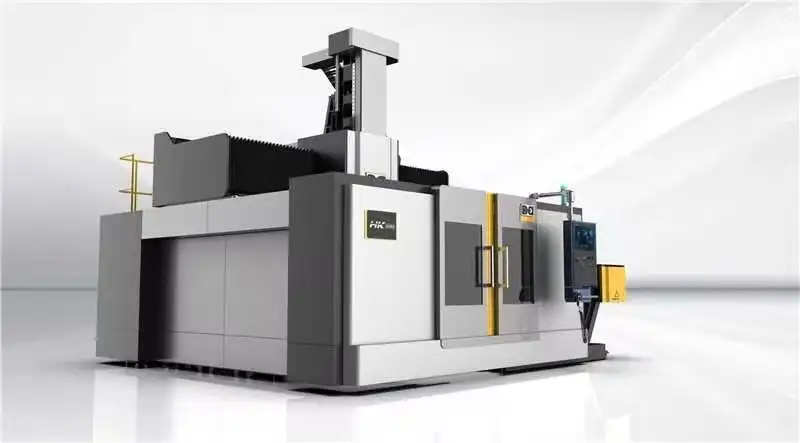
From Luxury to Necessity
What was once a niche capability for elite aerospace shops has become essential infrastructure across modern manufacturing. Today, 5-axis CNC machining is no longer a “nice-to-have”—it’s a strategic necessity for industries demanding high-precision machining, complex geometries, and the ability to tame difficult materials like titanium and Inconel 718.
The numbers tell the story: the global 5-axis CNC market exceeded $12 billion in 2024 and is growing at 8.5% annually through 2030 (Grand View Research). This momentum stems from a simple reality—traditional 3-axis machines can’t keep up. They struggle with deep cavities, undercuts, and freeform surfaces, forcing costly re-fixturing, secondary operations, and quality compromises.
5-axis systems solve this by moving the tool along three linear axes (X, Y, Z) while simultaneously rotating the workpiece or spindle on two additional axes. The result? The cutter stays optimally engaged at all times—improving surface finish by 30–50%, slashing cycle times, and accessing features in a single setup that would otherwise require multiple machines or manual finishing.
Aerospace Machining: Conquering Complexity and Heat
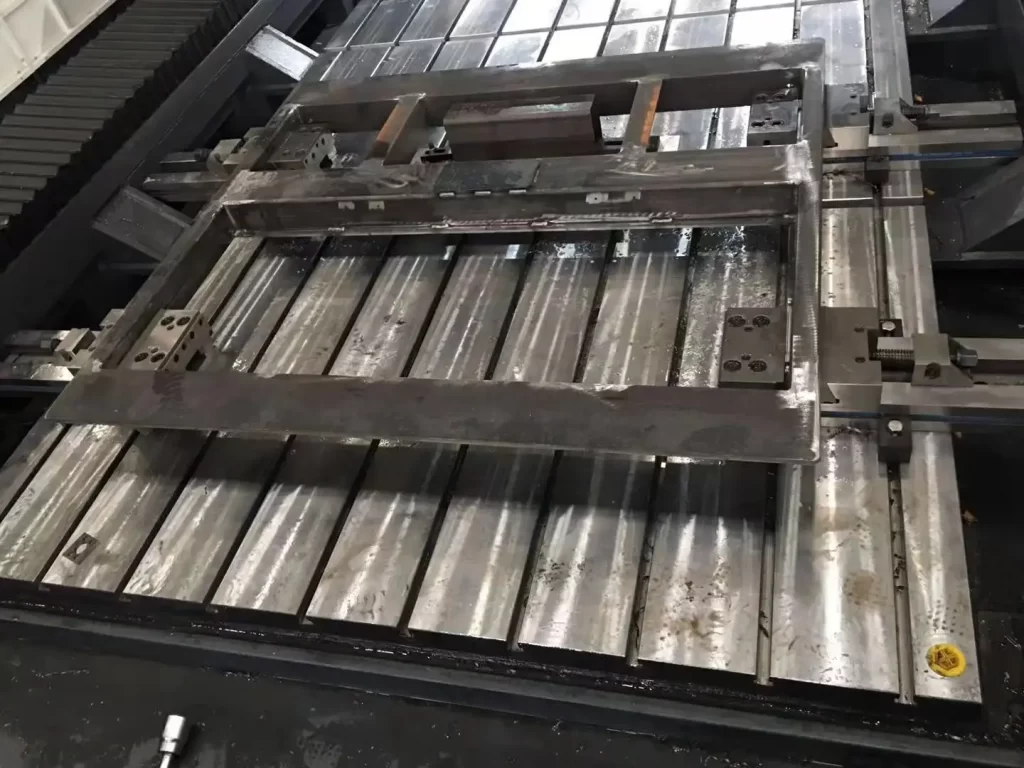
Aerospace machining remains the gold standard for 5-axis adoption. Components like turbine blades, blisks, and combustion liners demand near-perfect geometry while resisting extreme temperatures—hence their reliance on nickel-based superalloys like Inconel 718.
Take turbine blade machining. A single-crystal blade integrates internal cooling channels with an aerodynamic outer shell. On a 3-axis mill, this requires multiple setups, EDM for internal features, and hours of hand blending—pushing cycle times beyond 20 hours with high scrap risk. A 5-axis machine completes the entire part in one chucking, cutting time to 6–8 hours and holding profile tolerances within ±0.02 mm.
Equally critical is compliance. Standards like AS9100 and NADCAP demand full process traceability. Modern 5-axis platforms integrate probing and thermal compensation, enabling real-time adjustments that boost first-pass yield from 89% to over 98%. As narrow-body jet production ramps globally, suppliers are betting big on 5-axis flexible cells to meet delivery targets without sacrificing quality.
Medical Device Manufacturing: Precision Meets Purity
In medical device manufacturing, tolerances are measured in microns—and errors can be life-threatening. Orthopedic implants now feature biomimetic porous lattices to encourage bone ingrowth, while dental abutments require flawless conical seals.
5-axis CNC delivers both. By dynamically adjusting the tool vector, it replicates complex lattice geometries with sub-micron accuracy. In hybrid workflows—where additive manufacturing builds the porous structure and 5-axis milling finishes critical mating surfaces—surface roughness stays below Ra 0.4 µm, meeting ISO 5832-3 for surgical titanium.
Just as vital is contamination control. Because 5-axis machining eliminates manual polishing and reduces handling, it aligns with FDA 21 CFR Part 820 requirements for cleanroom production (ISO Class 7+). For implant makers, this means faster validation and fewer batch rejections.
With the global orthopedic market heading toward $70 billion by 2030, regional production hubs are scaling high-precision machining for surgical implants—making 5-axis capability a non-negotiable asset.
Electric Vehicle Components & Automotive CNC Machining: Powering the E-Mobility Shift
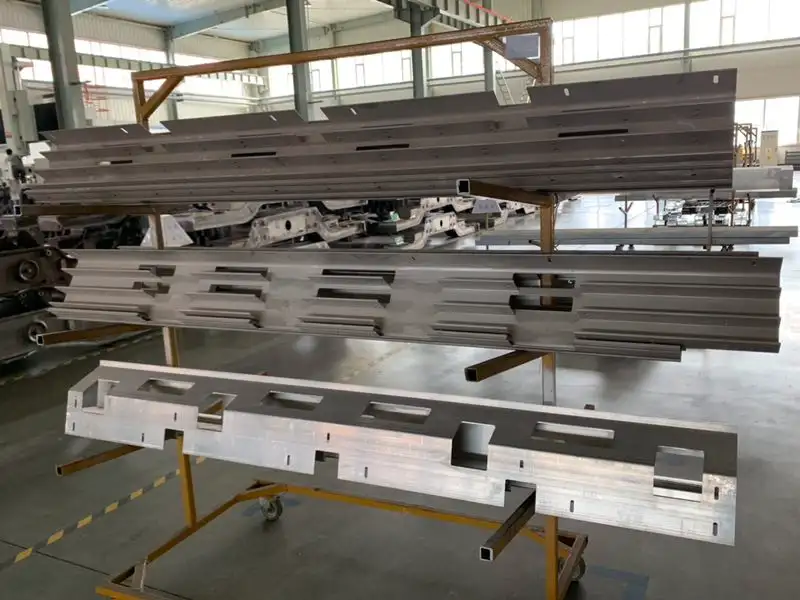
The rise of electric vehicle components has redefined automotive machining. Consider the EV motor housing: to maximize power density, it integrates 3D-spiral oil galleries for direct rotor cooling. These channels must align precisely with stator mounting surfaces—within ±0.05 mm—a task only 5-axis interpolation can handle reliably in one setup.
Similarly, aluminum battery trays from high-pressure die casting still require extensive CNC work. Mounting bosses, sealing surfaces, and coolant ports often sit on complex spatial angles. A 5-axis system accesses them all without re-fixturing, cutting cycle time by up to 40%.
Even in legacy powertrains, automotive CNC machining is evolving. Turbocharger impellers with 15–20 twisted blades (as thin as 1.5 mm) suffer chatter on 3-axis mills. But 5-axis high-speed machining—using short-flute tools and optimized paths—boosts surface integrity and pushes balance yield from 85% to 99%+.
With EV platforms iterating every 12–18 months, flexibility is key. Forward-looking shops now pair 5-axis machines with digital twins to validate toolpaths offline—slashing trial runs and accelerating time-to-market.
Precision Mold Making: Beyond Aesthetics
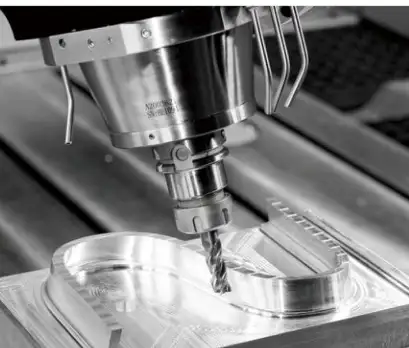
Precision mold making has long leveraged 5-axis technology—but today’s demands are higher than ever. Molds for smartphones, dashboards, and appliances feature deep cavities, micro-textures, and undercuts that defy 3-axis access.
In deep-cavity work (depth-to-opening > 3:1), long tool overhangs cause vibration and poor finish. 5-axis solves this by tilting the tool to stay perpendicular, using shorter, stiffer cutters. It also machines side walls and reverse angles without electrodes or handwork.
The payoff? A dashboard mold finished with 5-axis milling achieves Ra 0.4 µm directly off the machine—cutting polishing time by 70%. For smartphone frames, it delivers seamless 3D contours and mirror chamfers in one operation. As mold shops compete on speed and quality, how to achieve SPI-A1 finish with CNC has become a key differentiator—and 5-axis is the answer.
Wind Turbine Components & Heavy Industry: Scaling Complexity
Renewables are another major driver. Wind turbine components, especially blade molds over 70 meters long, require aerodynamically perfect surfaces. Deviations beyond 0.1 mm/m reduce energy capture. 5-axis gantry machines with dual rotary heads maintain continuous tool contact along the evolving airfoil—ensuring smooth, accurate profiles.
In oil and gas, subsea valve bodies made from super duplex stainless steel must seal reliably at 15,000+ psi. Their internal flow paths intersect in 3D, and sealing faces demand flatness under 0.01 mm. Welding introduces leak risks—so 5-axis machining produces these features monolithically.
Marine propellers tell a similar story. Modern controllable-pitch designs have blades with continuously varying geometry. Only 5-axis milling replicates the hydrodynamic intent faithfully—boosting efficiency by 3–5%. Classification societies like DNV now mandate machined—not hand-finished—surfaces, making 5-axis the only compliant path.
Consumer Electronics & Cross-Industry Synergies
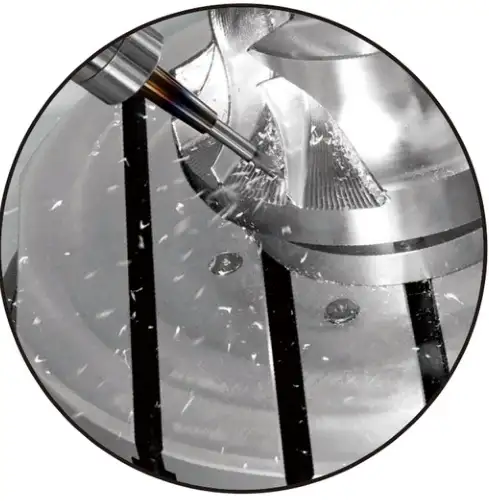
In consumer electronics, high-precision machining goes beyond looks. Miniature components—like prism mounts for periscope cameras—require 0.3 mm holes in 1 mm-thick aluminum, positioned within ±0.01 mm. Micro 5-axis machines with air-bearing spindles make this routine.
Meanwhile, multi-axis machining is central to lights-out manufacturing. Leading contract manufacturers deploy 5-axis cells with robotic loading, in-process vision, and MES integration—boosting OEE above 85% while cutting labor costs by 60%.
Conclusion: The New Industrial Baseline
From aerospace machining to medical device manufacturing, from EV motor housing production to wind turbine components, 5-axis CNC has evolved from specialty tool to industrial baseline. It solves real, costly problems: machining Inconel 718 without cracking, producing turbine blades with internal cooling, enabling precision mold making at scale, and supporting the rapid iteration demanded by automotive CNC machining.
As supply chains localize and product cycles shrink, the question for manufacturers is no longer if they need 5-axis capability—but how quickly they can integrate it to stay competitive.